Logik Washing Machine User Manual: A Comprehensive Guide
Welcome! This manual offers detailed instructions for installation, operation, and maintenance of your Logik washing machine, ensuring optimal performance and longevity.
Congratulations on choosing a Logik washing machine! This appliance is designed to provide efficient and reliable laundry care for your household. Before first use, please take the time to carefully read this user manual. It contains vital information regarding safety precautions, installation procedures, operating instructions, and maintenance guidelines.
Understanding your machine’s features and functions will maximize its performance and extend its lifespan. This manual will guide you through each step, from loading laundry correctly to selecting the appropriate wash programs. We are confident that your Logik washing machine will become an invaluable asset in your daily routine.
Safety Precautions and Warnings
Important Safety Instructions: To ensure safe operation, always disconnect the machine from the power supply before cleaning or performing maintenance. Never attempt to repair the appliance yourself; contact qualified service personnel. Do not overload the washing machine, as this can cause damage and pose a safety hazard.
Keep children and pets away from the machine during operation. Ensure proper ventilation and avoid placing the machine in direct sunlight or near heat sources. Only use detergents specifically designed for washing machines, following the manufacturer’s instructions carefully.
Machine Overview: Parts and Functions
Familiarize yourself with your Logik washing machine! Key components include the control panel for program selection, the detergent drawer for dispensing washing agents, and the drum where clothes are washed. The machine features water inlet hoses for supply, a drain hose for waste water, and a robust outer cabinet.
The rear panel houses connections and access for maintenance. Understanding these parts ensures proper usage and facilitates troubleshooting when needed, maximizing the appliance’s lifespan.
Control Panel Explained
The control panel is your command center! It features a program selector dial to choose wash cycles like Cotton, Delicates, or Quick Wash. Buttons adjust temperature, spin speed, and activate special functions like Delay Start. An LED display shows the remaining wash time and selected settings.
Symbols clearly indicate each function; consult the program guide for details. Proper understanding of these controls allows for customized washing tailored to your laundry needs, ensuring optimal cleaning results.
Detergent Drawer and Dispenser Information
The detergent drawer is typically divided into three compartments. The first, marked with ‘I’ or a Roman numeral, is for pre-wash detergent – use only when selecting a pre-wash cycle. The second, usually marked ‘II’, is for the main wash detergent. The third compartment, often symbolized by a flower, is for fabric softener.
Always follow detergent manufacturer’s instructions and avoid overfilling. Use only washing machine-safe detergents to prevent clogging and ensure optimal performance.
Installation Instructions
Before installation, ensure the machine is on a level surface. Adjust the feet to stabilize it, preventing excessive vibration during operation. Carefully remove all transit bolts – these are crucial for safe transport but must be removed before use. Connect the water supply hoses, ensuring tight, leak-proof connections to both the machine and the water taps.
Proper installation is vital for performance and longevity. Refer to the detailed diagrams within this manual for visual guidance throughout the process.
Connecting Water Supply Hoses
Attach the inlet hoses to the hot and cold water taps, ensuring the rubber washers are correctly positioned for a watertight seal. Hand-tighten initially, then use pliers for a further half-turn – avoid over-tightening, which can damage the connections. Check for leaks immediately after connecting.
The blue hose connects to the cold water supply, and the red hose to the hot. Proper connection ensures optimal washing performance and prevents potential damage to the machine.
Electrical Connection Requirements
Ensure the voltage matches the machine’s rating (typically 220-240V). A dedicated, earthed socket is crucial for safety. Do not use extension leads or adapters. The washing machine must be properly grounded to prevent electric shock.
The electrical installation should comply with local regulations. If unsure, consult a qualified electrician. Incorrect electrical connection can void the warranty and pose a serious safety hazard. Always disconnect the power before maintenance.
Operating Your Washing Machine
Before first use, ensure the machine is level and all transit bolts are removed. Properly load laundry, avoiding overloading which impacts cleaning performance. Select the appropriate wash program based on fabric type and soil level. Add detergent to the designated drawer, following manufacturer’s instructions.
Press the start button to initiate the cycle. Monitor the machine during operation and avoid interrupting mid-cycle unless necessary. Once finished, promptly remove laundry to prevent mildew.
Loading the Washing Machine Correctly
Optimal loading ensures effective cleaning and prevents damage. Distribute items loosely within the drum, avoiding tightly packed bundles. Do not overload – leave sufficient space for clothes to move freely. Check pockets for objects like coins or keys. For unbalanced loads, redistribute items evenly around the drum.
Separate delicate items and heavier garments. Follow the maximum load capacity indicated in the program guide to maintain performance and protect the machine.
Selecting Wash Programs
Choose the correct program based on fabric type and soil level. The control panel offers various options, including Cotton, Synthetics, Delicates, and Quick Wash. Refer to the ‘Understanding Wash Programs’ section for detailed descriptions of each cycle. Adjust temperature and spin speed as needed for optimal results.
Consider the load size when selecting a program; some programs are more efficient with smaller or larger loads. Always consult the garment care label before choosing a wash cycle.
Understanding Wash Programs
Your Logik washing machine features a range of programs designed for different fabrics and cleaning needs. The Cotton program is ideal for everyday laundry, while Delicates/Hand Wash provides gentle care for sensitive items. Synthetics handles durable fabrics, and Quick Wash offers a fast cycle for lightly soiled loads.
Each program has pre-set temperature, spin speed, and wash duration settings, but these can often be adjusted to suit your preferences. Detailed explanations of each program follow in subsequent sections.
Cotton Program Details
The Cotton program is your go-to for everyday washing of durable cotton items like t-shirts, bed linen, and towels. It utilizes a higher wash temperature and vigorous agitation to effectively remove dirt and stains. Default settings typically include a 40°C or 60°C wash with a 1200-1400 RPM spin cycle.
For heavily soiled cottons, pre-soaking or using a higher temperature is recommended. Adjust spin speed to minimize wrinkles or for delicate cottons.
Delicates/Hand Wash Program Guide
The Delicates/Hand Wash program is specifically designed for fragile items requiring gentle care, such as lingerie, silk, and hand-wash only labeled garments. This program uses a low wash temperature – typically 30°C or cold – and a reduced spin speed, often around 800 RPM, to prevent damage.
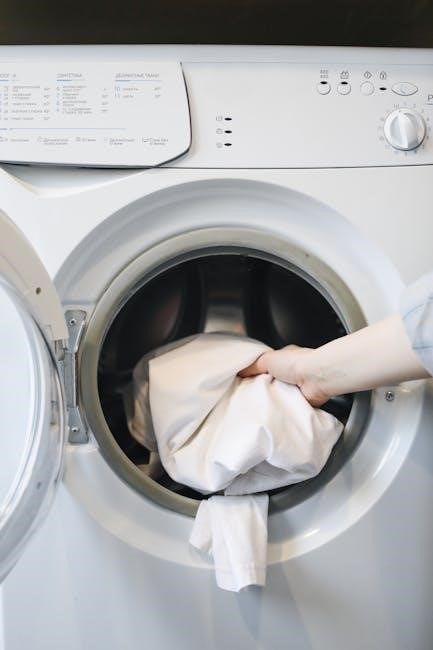
Always place delicate items in a mesh laundry bag for added protection. Avoid overloading the machine to ensure gentle washing action and prevent stretching or snagging.
Synthetic Program Settings
The Synthetic program is ideal for washing fabrics like polyester, nylon, and acrylic blends. This program utilizes a moderate temperature – typically between 40°C and 60°C – and a medium spin speed, generally around 1000-1200 RPM, to effectively clean synthetic materials without causing excessive shrinkage or damage.
For best results, avoid using high temperatures with synthetic fabrics. Check garment care labels for specific washing instructions and adjust settings accordingly. Do not overload the drum.
Quick Wash Options Explained
The Quick Wash function provides a convenient solution for lightly soiled garments, offering a significantly reduced wash cycle duration – typically between 15 and 30 minutes. This option utilizes a moderate temperature, usually around 30°C or 40°C, and a reduced spin speed to conserve water and energy.
While efficient, Quick Wash is best suited for smaller loads and items requiring a refresh rather than a deep clean. Always check garment care labels before using this setting.
Using Special Features
Your Logik washing machine boasts several special features designed to enhance your laundry experience. The Delay Start function allows you to program the machine to begin a wash cycle at a later, more convenient time, up to 24 hours in advance. This is ideal for taking advantage of off-peak electricity rates.
Additionally, you can easily adjust the wash temperature to suit different fabric types, ensuring optimal cleaning and preventing damage. Refer to garment care labels for recommended temperatures.
Delay Start Function Instructions
To utilize the Delay Start feature, first select your desired wash program, temperature, and any other options. Then, press the Delay Start button. The display will show the default delay time, typically several hours. Use the program selector dial or dedicated buttons to increase or decrease the delay time in hourly increments.
Once your desired delay is set, press the Start/Pause button. The machine will enter a delayed start mode, and the wash cycle will begin automatically at the programmed time. Ensure the water supply is connected before setting a delay.
Temperature Adjustment Guide
Your Logik washing machine allows for precise temperature control to suit various fabric types. Most programs offer a range of temperature settings, typically displayed as Cold, 30°C, 40°C, 60°C, and 90°C. Use the temperature selection button – often symbolized by a thermometer – to cycle through the available options.
Lower temperatures are ideal for delicates and colored fabrics, while higher temperatures are suitable for whites and heavily soiled items. Always check the garment care label before selecting a temperature to prevent damage or fading.
Maintenance and Cleaning
Regular maintenance ensures your Logik washing machine operates efficiently and extends its lifespan. Key areas require periodic cleaning. The detergent drawer should be removed and rinsed thoroughly to prevent build-up, ideally monthly. The filter, located usually at the front bottom of the machine, needs cleaning to remove lint and debris – check your manual for specific location.
Run a drum cleaning cycle with a washing machine cleaner every few months to eliminate odors and residue. Wipe down the exterior with a damp cloth.
Cleaning the Detergent Drawer
To clean the detergent drawer, first, remove it from the washing machine – usually by pressing a release button or lever. Rinse each compartment thoroughly under warm running water, using a soft brush to dislodge any solidified detergent or fabric softener residue. Pay close attention to the pre-wash compartment, as this often accumulates build-up.
Ensure all residue is removed before reinserting the drawer. Regular cleaning, ideally monthly, prevents blockages and ensures optimal detergent dispensing.
Filter Cleaning Procedures
Locate the washing machine’s filter access panel, typically at the front, bottom right. Have a shallow container and towels ready to catch any spilled water. Carefully open the panel and unscrew the filter cap – water will drain, so be prepared! Remove the filter and clean it thoroughly under running water, removing lint, hair, and small objects.
Inspect the filter housing for debris and clean as needed. Replace the filter securely and close the access panel. Regular filter cleaning maintains efficient drainage.
Drum Cleaning Recommendations
To maintain optimal hygiene and performance, clean your Logik washing machine drum regularly. Run an empty hot wash cycle with a washing machine cleaner, or a cup of white vinegar, every one to three months. This helps remove detergent residue, mildew, and unpleasant odors.
Periodically wipe down the drum’s interior with a damp cloth. Avoid abrasive cleaners, as they can damage the drum’s surface. Leaving the door ajar after use promotes ventilation and prevents moisture buildup.
Troubleshooting Common Issues
Machine Not Starting: Check the power cord is securely plugged in and the circuit breaker hasn’t tripped. Ensure the door is firmly closed – a safety lock prevents operation if ajar. Water Not Draining: Inspect the drain hose for kinks or blockages.
Clean the drain pump filter (refer to ‘Filter Cleaning Procedures’) as it may be clogged with lint or small objects. If issues persist, consult the ‘Error Codes’ section or contact customer support.
Machine Not Starting – Possible Causes
Power Supply Issues: Verify the washing machine is correctly plugged into a functioning power outlet. Check your home’s circuit breaker or fuse box to ensure the circuit hasn’t tripped or blown. Door Lock Malfunction: The machine won’t start if the door isn’t securely latched.
Control Panel Lock: Some models feature a child lock; disable it if activated. If problems continue, a component failure may require professional assistance.
Water Not Draining – Solutions
Check the Drain Hose: Ensure the drain hose isn’t kinked, twisted, or blocked. Verify it’s positioned correctly at an appropriate height. Filter Obstruction: A clogged drain pump filter is a common cause; locate and clean it carefully, following the manual’s instructions.
Pump Malfunction: If the filter is clear, the drain pump itself might be faulty, requiring professional repair. Avoid running the machine until the draining issue is resolved.
Error Codes and Their Meanings
Error codes indicate specific issues within your Logik washing machine. “E1” often signals a water supply problem – check the taps and inlet hose. “E2” typically means a draining issue; inspect the drain hose and filter. “E3” suggests an imbalance during the spin cycle; redistribute the laundry.
“E4” can indicate over-sudsing, requiring a rinse cycle. Consult the full error code list in your manual for a comprehensive understanding and troubleshooting steps.
Technical Specifications
Dimensions: Height 85cm, Width 60cm, Depth 55cm (approximate – varies by model). Maximum Load Capacity: Typically 7-9kg, depending on the specific Logik washing machine model. Water Pressure: Requires a minimum of 1 bar and a maximum of 10 bar. Electrical Supply: 220-240V, 50Hz.
Spin Speed: Ranges up to 1400 RPM. Energy Efficiency Class: Check the energy label affixed to the machine for detailed ratings. These specifications are subject to change; refer to your model’s documentation.
Warranty Information
Standard Warranty: Your Logik washing machine is covered by a one-year manufacturer’s warranty against defects in materials and workmanship from the date of purchase. This warranty covers repair or replacement of faulty parts. Exclusions: Damage caused by misuse, improper installation, or unauthorized repairs are not covered.

Claim Procedure: To make a warranty claim, contact customer support with proof of purchase. Retain your original receipt. Extended warranties may be available; inquire at the point of sale.
Contacting Customer Support
Need Assistance? Our dedicated customer support team is here to help with any questions or concerns regarding your Logik washing machine. Phone Support: Call our toll-free number at 1-800-LOGIK-HELP (1-800-564-4435) during business hours, Monday-Friday, 9 AM to 5 PM EST.
Online Support: Visit our website at www.logiksupport.com for FAQs, troubleshooting guides, and a contact form. Email: Send us an email at support@logiksupport.com, and we’ll respond within 24-48 hours.