BD Vacutainer Tube Guide: A Comprehensive Overview
Navigating blood collection requires precision; this guide details BD Vacutainer tubes, ensuring accurate diagnostics and optimal patient care through proper technique.
BD Vacutainer tubes represent a cornerstone of modern laboratory diagnostics, revolutionizing the process of blood collection. Developed by Becton, Dickinson and Company (BD), these evacuated tubes simplify venipuncture, minimizing the risk of contamination and ensuring sample integrity.
The system utilizes a vacuum to automatically draw the specified amount of blood, eliminating the need for syringes and manual filling. This not only enhances patient comfort but also standardizes the collection process, leading to more reliable and reproducible results.
Each tube contains specific additives tailored to the intended laboratory tests, preserving the sample’s characteristics for accurate analysis. Understanding the nuances of each tube type is crucial for healthcare professionals to guarantee the validity of diagnostic findings and ultimately, patient well-being.
Understanding the Importance of Proper Blood Collection
Accurate diagnostic testing hinges on the quality of the blood sample collected. Improper technique can introduce pre-analytical errors, significantly impacting test results and potentially leading to misdiagnosis or inappropriate treatment. Factors like incorrect tube selection, inadequate mixing of additives, and prolonged tourniquet application can all compromise sample integrity.

Maintaining patient safety is paramount; adhering to established protocols minimizes discomfort and prevents complications like hematoma formation. Proper order of draw is also critical to avoid cross-contamination between tube additives, ensuring each test receives an unadulterated sample.
Ultimately, meticulous blood collection practices demonstrate a commitment to patient care and contribute to reliable, actionable data for healthcare providers.
Types of BD Vacutainer Tubes – An Overview
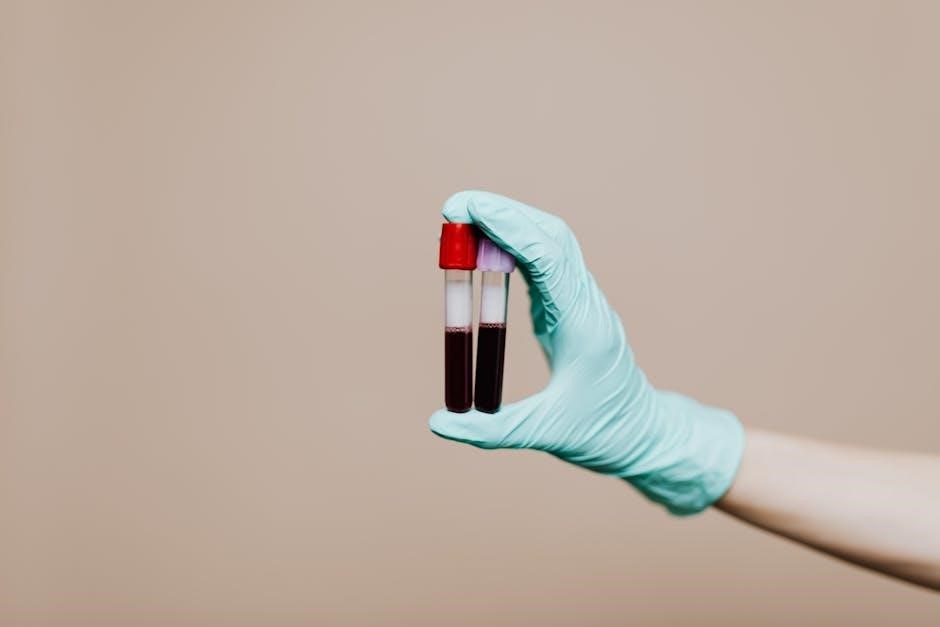
BD Vacutainer tubes are categorized by their stopper color, each indicating specific additives designed for particular laboratory tests. These additives prevent clotting, preserve sample components, or facilitate specific analyses. Tubes range from those with no additives – used for basic serum collection – to those containing anticoagulants, clot activators, or preservatives.
Common types include EDTA tubes (lavender), heparin tubes (green), citrate tubes (light blue), and serum separator tubes (gold/tiger). Understanding the function of each additive is crucial for selecting the appropriate tube for the requested tests.
This diverse range ensures sample integrity and accurate results across hematology, chemistry, immunology, and coagulation testing.
Color-Coded Tube Guide: Decoding the System
BD Vacutainer tubes employ a straightforward color-coding system to simplify tube selection and minimize errors. Each color corresponds to specific additives and intended laboratory tests. For instance, lavender tops contain EDTA for hematology, while green tops utilize heparin as an anticoagulant.
Gold or tiger-top tubes, known as Serum Separator Tubes (SSTs), are used for chemistry panels. Light blue tops contain citrate for coagulation studies, and gray tops house sodium fluoride for glucose testing.
This visual system, coupled with clear labeling, ensures phlebotomists and lab personnel quickly identify the correct tube, maintaining sample integrity and reliable test outcomes.
Hematology Tubes
Hematology tubes are crucial for analyzing blood components involved in blood cell formation and function. These tubes contain additives preventing clotting, ensuring accurate blood cell counts and morphological assessments. Proper selection is paramount for reliable results.
The most common hematology tubes include EDTA (lavender top) for complete blood counts (CBCs) and blood smears, and Heparin (green top) for differential white blood cell counts and erythrocyte sedimentation rate (ESR) testing.
Citrate tubes (light blue) are also utilized, though primarily for coagulation studies, they can indirectly impact hematological assessments. Understanding each tube’s specific application is vital for optimal diagnostic accuracy.
EDTA Tubes (Lavender Top): Principles & Uses

Ethylenediaminetetraacetic acid (EDTA) tubes, easily identified by their lavender tops, are the most frequently used tubes in hematology. EDTA acts as an anticoagulant by chelating calcium ions, essential for the coagulation cascade. This prevents clotting, preserving blood cell morphology for accurate analysis.
These tubes are ideal for complete blood counts (CBCs), including white blood cell differentials, red blood cell indices, and platelet counts. They are also suitable for preparing blood smears for microscopic examination.
It’s crucial to avoid prolonged storage before analysis, as cell morphology can degrade. EDTA interference must be considered when performing certain tests.
Heparin Tubes (Green Top): Applications & Considerations
Heparin tubes, distinguished by their green stoppers, utilize heparin as an anticoagulant. Unlike EDTA, heparin doesn’t chelate calcium; instead, it activates antithrombin, inhibiting thrombin and other clotting factors. This provides a more physiological anticoagulation, preserving certain coagulation parameters.
These tubes are commonly used for arterial blood gas (ABG) analysis, assessing pH, oxygen, and carbon dioxide levels. They are also suitable for STAT chemistry tests where immediate analysis is required, and for viscosity measurements.
Heparin can interfere with some laboratory assays, and platelet clumping can occur, impacting accurate platelet counts. Careful handling is essential.
Citrate Tubes (Light Blue Top): Coagulation Studies Explained
Citrate tubes, identified by their light blue stoppers, employ sodium citrate as the anticoagulant. Citrate binds calcium, essential for the coagulation cascade, effectively preventing blood clotting without altering clotting factors themselves. This makes them ideal for coagulation testing.
These tubes are primarily used for Prothrombin Time (PT), Activated Partial Thromboplastin Time (aPTT), and fibrinogen assays, evaluating the extrinsic and intrinsic pathways of coagulation. Accurate fill volumes are critical – underfilling can lead to falsely elevated results.
Plasma should be separated from cells within one hour to avoid citrate’s effect on other tests. Avoid using for complete blood counts.

Chemistry Tubes
Chemistry tubes are designed to facilitate accurate analysis of various blood components, providing crucial data for diagnosing and monitoring a wide range of medical conditions. These tubes contain additives that preserve the integrity of the sample, preventing interference with analytical processes.
The selection of the appropriate chemistry tube depends on the specific tests being ordered. Common types include Serum Separator Tubes (SST), Plasma Separator Tubes (PST), and Lithium Heparin tubes, each optimized for different analytes.
Proper filling is paramount to maintain the correct blood-to-additive ratio, ensuring reliable and reproducible results. Following the recommended order of draw is also essential to avoid cross-contamination.
Serum Separator Tubes (SST ー Gold/Tiger Top): Detailed Guide
Serum Separator Tubes (SSTs), easily identified by their gold or tiger-top stoppers, are widely used for a broad spectrum of chemistry tests. These tubes contain a clot activator and a gel separator, facilitating efficient serum separation after centrifugation.
The clot activator initiates the coagulation process, while the gel barrier prevents contact between the cells and the serum, minimizing interference with test results. This ensures high-quality serum samples suitable for various clinical chemistry assays.
Proper filling to the indicated fill line is crucial for optimal serum separation and accurate test outcomes. Always allow sufficient time for complete clotting before centrifugation, typically 30 minutes.
Plasma Separator Tubes (PST ⎼ Lavender/Gray Top): Usage & Benefits
Plasma Separator Tubes (PSTs), distinguished by their lavender or gray stoppers, are designed for collecting whole blood samples intended for plasma determinations. These tubes contain the anticoagulant EDTA, preventing blood clotting, and a gel separator to efficiently separate plasma from cellular components.
The gel barrier creates a physical separation, minimizing contact between the plasma and blood cells, thus reducing interference with many laboratory tests. PSTs are ideal for hematology, coagulation, and molecular diagnostic applications.
Ensure proper filling to the designated fill line for accurate plasma volume and reliable test results. Gentle inversion is required for adequate mixing of the EDTA anticoagulant with the blood sample.
Lithium Heparin Tubes (Red Top): Specific Chemistry Tests
Lithium Heparin tubes, easily identified by their red stopper, are primarily utilized for plasma determinations in clinical chemistry. Lithium heparin acts as an anticoagulant, inhibiting the coagulation cascade without significantly interfering with most chemical tests.
These tubes are particularly well-suited for stat chemistry profiles, including electrolytes, glucose, and lipid panels. The absence of significant interference makes them a versatile choice for a broad range of analytes.
Proper mixing via gentle inversion is crucial to ensure adequate anticoagulation. Avoid vigorous shaking, which can cause hemolysis. Following the correct order of draw is also essential to prevent cross-contamination of additives.
Immunology & Serology Tubes
Immunology and serology testing demand high-quality serum or plasma samples. Specific BD Vacutainer tubes are designed to optimize sample integrity for accurate results in these analyses.
These tests often involve detecting antibodies, antigens, or immune complexes, requiring minimal interference from anticoagulants or other additives. The choice of tube depends on the specific assay requirements.
Red-top tubes, without additives, are frequently used for basic serum collection intended for immunological studies. Gray-top tubes, containing sodium fluoride and potassium oxalate, are preferred when glucose testing is performed alongside immunological assessments, preserving glucose levels while allowing for serum separation.
Red Top Tubes (Without Additives): Basic Serum Collection
Red-top BD Vacutainer tubes are the simplest, containing no additives or anticoagulants. This makes them ideal for basic serum collection, where a clean separation of serum from the clot is desired for a wide range of tests.
Serum, the liquid portion of blood after clotting, is crucial for many diagnostic assays, including immunology, serology, and certain chemistry panels. The absence of additives minimizes interference with test results, ensuring accuracy.
Proper technique is vital: allow the blood to clot completely (typically 30-60 minutes) before centrifugation. Gently invert the tube 5-10 times immediately after collection to prevent clotting. These tubes are a foundational element in routine blood testing.
Gray Top Tubes (Sodium Fluoride/Potassium Oxalate): Glucose Testing Focus
Gray-top BD Vacutainer tubes contain sodium fluoride and potassium oxalate, specifically designed to inhibit glycolysis – the metabolic breakdown of glucose by blood cells. This preservation is critical for accurate glucose measurements.
Sodium fluoride blocks the enzyme enolase, slowing down glucose metabolism, while potassium oxalate acts as an anticoagulant, preventing blood clotting. These tubes are the preferred choice for glucose tolerance tests and routine glucose monitoring.
Prompt analysis is still recommended, even with the glycolytic inhibitor. Ensure proper mixing by inverting gently 8-10 times immediately after draw. Samples should ideally be tested within 30-60 minutes for optimal results.
Specialized BD Vacutainer Tubes
Beyond the standard color-coded tubes, BD offers specialized Vacutainers for unique testing needs. These tubes address specific analyte sensitivities and collection requirements, ensuring data integrity.
Trace element tubes, with a royal blue top, minimize contamination from common sources like zinc and lead, crucial for accurate heavy metal analysis. Blood gas tubes, dark blue topped, create an anaerobic environment, preserving blood gases for arterial blood gas (ABG) testing.
Other specialized options cater to specific research or esoteric tests. Understanding these specialized tubes expands the scope of diagnostic capabilities and supports advanced laboratory practices.
Trace Element Tubes (Royal Blue Top): Minimizing Contamination
Royal blue top BD Vacutainer trace element tubes are specifically designed for the accurate quantification of trace metals and other elements in blood. These tubes feature a specialized silica coating that minimizes the risk of contamination from common sources like the tube stopper or manufacturing processes.
This is critical because even minute levels of contaminants can significantly skew results when measuring extremely low concentrations of trace elements. They are ideal for testing for lead, mercury, cadmium, and other potentially toxic metals.
Proper collection technique is still vital; avoid using alcohol-based skin antiseptics, opting for chlorhexidine instead, to prevent external contamination.
Blood Gas Tubes (Dark Blue Top): Anaerobic Environment & Analysis
Dark blue top BD Vacutainer blood gas tubes are essential for analyzing blood’s pH, partial pressures of oxygen (PaO2) and carbon dioxide (PaCO2), and bicarbonate levels. These tubes contain lithium heparin as an anticoagulant, preventing clotting without interfering with blood gas measurements.
Crucially, they create an anaerobic environment, minimizing exposure to atmospheric gases which would alter the sample’s composition. Immediate sealing with a specialized stopper prevents gas exchange.
Proper technique dictates gentle mixing to ensure adequate heparin distribution, and prompt analysis is vital – ideally within 15-30 minutes – to maintain sample integrity and accurate results. Avoid prolonged storage or exposure to air.
Proper Blood Draw Technique with Vacutainer Tubes
Successful venipuncture with BD Vacutainer tubes demands meticulous technique. Begin with patient identification and proper positioning. Apply a tourniquet, locate a suitable vein, and cleanse the site thoroughly with an antiseptic solution.
Insert the needle at a 15-30 degree angle, ensuring smooth entry. Attach the Vacutainer tube, allowing the vacuum to draw blood. Fill tubes in the correct order of draw to prevent cross-contamination of additives.
Once filled, gently invert tubes containing additives (like EDTA or heparin) several times to ensure proper mixing. Release the tourniquet before removing the needle, and apply pressure to the puncture site. Dispose of sharps safely.
Common Errors & Troubleshooting
Several issues can arise during blood collection. Hemolysis, indicated by red serum/plasma, often results from vigorous shaking, small needle gauge, or difficult draws. Clotted samples can occur with insufficient anticoagulant or delayed processing.
Short draws – tubes not filled to the indicated line – compromise test accuracy. Air bubbles introduce errors; gently remove them before mixing. If a vein collapses, release the tourniquet and attempt a new site.
Troubleshooting includes verifying proper tube selection, confirming correct order of draw, and ensuring adequate mixing of additives; Document any deviations from standard procedure and consult laboratory guidelines for resolution.
Storage and Handling of BD Vacutainer Tubes
Proper storage maintains tube integrity and ensures reliable results. Store unopened tubes in a cool, dry place, away from direct sunlight and extreme temperatures, typically between 2°C and 30°C (36°F and 86°F).
Once opened, use tubes immediately. Do not use expired tubes, as additive potency may diminish. Handle tubes carefully to avoid damage or contamination. Protect filled tubes from excessive light exposure, particularly those used for light-sensitive tests.
Follow manufacturer’s recommendations for specific storage requirements of individual tube types. Refrigeration or freezing may be necessary for certain samples; consult lab protocols for guidance.
Safety Precautions & Disposal
Bloodborne pathogen exposure is a significant risk; always adhere to universal precautions. Wear appropriate personal protective equipment (PPE), including gloves, lab coats, and eye protection, during all blood collection procedures.
Never recap, bend, or break used needles. Dispose of used vacutainer systems – including tubes, holders, and needles – immediately into designated sharps containers. Ensure sharps containers are readily accessible and compliant with local regulations.
Treat all blood and body fluids as potentially infectious. Follow established protocols for handling spills and decontamination. Proper disposal minimizes risks to healthcare workers and the environment.
BD Vacutainer Order of Draw: Best Practices
Maintaining the correct order of draw is crucial to prevent cross-contamination of additives between tubes, ensuring accurate test results. Generally, follow these guidelines: Blood Culture tubes first, then Coagulation (Light Blue), Serum tubes (Red, Gold/SST), Heparin (Green), EDTA (Lavender), and finally, Glycolytic Inhibitor tubes (Gray).
Adhering to this sequence minimizes interference from carryover. Always consult your laboratory’s specific protocol, as variations may exist. Incorrect order can lead to falsely elevated or depressed values, impacting patient diagnosis and treatment.
Proper technique, including thorough mixing of additives, is equally important alongside the correct draw order;
Frequently Asked Questions (FAQs)
Q: Can I reuse a Vacutainer tube? A: No, Vacutainer tubes are single-use only. Reusing compromises sterility and additive concentrations, leading to inaccurate results.
Q: What if a tube is underfilled or overfilled? A: Both scenarios can affect test accuracy. Underfilled tubes may not have the correct blood-to-additive ratio, while overfilled tubes can cause additive carryover.
Q: How long can blood samples be stored before analysis? A: Storage time varies depending on the test. Refer to your laboratory’s guidelines for specific requirements. Generally, prompt analysis is preferred.
Q: What do the different tube colors signify? A: Each color indicates a specific additive and intended use, detailed throughout this guide.
Resources & Further Information (BD Website Links)
For comprehensive information and the latest updates on BD Vacutainer systems, please visit the official BD website. Access detailed product manuals, training materials, and safety data sheets at https://www.bd.com/vacutainer.
Explore their extensive library of educational resources, including instructional videos and frequently asked questions. You can also find information on proper blood collection techniques and quality control procedures. BD offers specialized support for healthcare professionals, ensuring optimal utilization of their products.
Download the latest BD Vacutainer Tube Guide in PDF format directly from their resource center: https://www.bd.com/resourcecenter.
Understanding Tube Additives and Their Impact
BD Vacutainer tubes contain various additives crucial for preserving sample integrity and ensuring accurate test results. These additives prevent coagulation, preserve cellular components, or provide necessary substrates for specific analyses.
Anticoagulants like EDTA, heparin, and citrate prevent blood clotting, essential for hematology and coagulation studies. Preservatives, such as sodium fluoride, inhibit enzymatic activity, vital for glucose measurements. Separators, like gel barriers, facilitate serum or plasma separation.
Understanding how each additive impacts different tests is paramount. Incorrect tube selection can lead to erroneous results. Always consult the laboratory’s guidelines and the BD Vacutainer Tube Guide PDF for appropriate additive selection based on the required analysis.

Pediatric Blood Collection Considerations
Blood collection from pediatric patients requires specialized techniques due to their smaller blood volume and potential for anxiety. Utilizing smaller volume BD Vacutainer tubes, like the Microtainer® system, minimizes blood loss and conserves the sample.
Venipuncture should be performed by experienced personnel, prioritizing patient comfort and minimizing trauma. Distraction techniques and age-appropriate communication are essential to reduce fear and ensure cooperation. Heel sticks are common in infants, requiring careful technique to avoid hemolysis.
Always refer to the BD Vacutainer Tube Guide PDF for guidance on appropriate tube selection and fill volumes for pediatric samples, ensuring accurate results while respecting the patient’s needs.
Geriatric Blood Collection Considerations
Blood draws from geriatric patients often present unique challenges, including fragile veins, decreased skin elasticity, and potential for bruising. Gentle technique and careful site selection are paramount to minimize discomfort and complications.
Tourniquet application should be less restrictive and for shorter durations to avoid prolonged venous stasis. Using a smaller gauge needle and a slow draw rate can help prevent vein collapse. Patient positioning is crucial for comfort and accessibility.
Consult the BD Vacutainer Tube Guide PDF for recommendations on appropriate tube selection and fill volumes, considering potential physiological changes in older adults, ensuring accurate diagnostic testing.
Quality Control in Vacutainer Tube Usage
Maintaining rigorous quality control is essential when utilizing BD Vacutainer tubes to guarantee reliable laboratory results. Regular inspection of tubes for cracks, expiration dates, and additive integrity is crucial before use.

Adherence to the BD Vacutainer Tube Guide PDF’s recommended order of draw minimizes cross-contamination between additives, preventing inaccurate test outcomes. Proper storage conditions – temperature and humidity control – preserve tube stability.
Documenting any deviations from standard procedures, like tube substitutions or fill volume discrepancies, is vital for traceability. Participating in proficiency testing programs validates technique and identifies areas for improvement, ensuring consistent, high-quality results.
Recent Advancements in BD Vacutainer Technology
BD continues innovating Vacutainer systems, enhancing blood collection efficiency and safety; Recent advancements include improved tube designs for better fill volumes and reduced hemolysis, directly impacting sample quality.
The development of specialized tubes with pre-added barcoded labels streamlines workflow and minimizes transcription errors, aligning with digital pathology initiatives. Enhanced additive formulations offer improved analyte stability, extending sample viability.
Furthermore, BD has introduced connectivity solutions integrating Vacutainer systems with laboratory information systems (LIS), enabling real-time data tracking and improved traceability. Referencing the latest BD Vacutainer Tube Guide PDF reveals these updates, ensuring labs utilize cutting-edge technology.
Mastering BD Vacutainer technology is paramount for dependable diagnostic outcomes. Consistent adherence to the guidelines detailed within the BD Vacutainer Tube Guide PDF minimizes pre-analytical errors, a significant source of inaccurate results.
Proper tube selection, meticulous draw technique, and diligent handling are crucial steps. Understanding additive functions and the correct order of draw directly impacts sample integrity.
Ultimately, prioritizing these best practices—reinforced by ongoing training and referencing updated resources—guarantees the delivery of precise and trustworthy data, supporting informed clinical decisions and enhancing patient well-being. Continuous review of the guide ensures labs remain current with evolving standards.