Navigating the world of knife sharpeners requires understanding available options – from classic whetstones to convenient electric models.
This guide explores various sharpeners, helping you select the best tool for maintaining ideal blade condition, like the Presto 08810.
Why Knife Sharpness Matters
A sharp knife is paramount for both safety and efficiency in the kitchen. Dull blades require more force, increasing the risk of slips and accidents. Conversely, a sharp knife glides through ingredients with ease, minimizing effort and maximizing control.
Sharpness also impacts food quality. Clean cuts preserve cell structure, enhancing flavor and texture. Maintaining a keen edge isn’t merely about convenience; it’s about elevating your culinary experience. Investing in a quality sharpener, like those from ChefsChoice or Work Sharp, ensures consistent performance and safety.
Types of Knives and Their Sharpening Needs
Different knives demand varied sharpening approaches. Japanese knives, often harder steels, benefit from whetstones for precision. Western knives, with softer steels, respond well to pull-through sharpeners for quick touch-ups. Serrated knives require specialized tools to maintain their unique edge.
Blade geometry also plays a role. A 20-degree angle is common for Western chefs’ knives, while Japanese knives often feature a 15-degree angle. Understanding your knife’s steel type and edge angle is crucial for selecting the appropriate sharpening method and achieving optimal results.

Manual Knife Sharpeners
Manual sharpeners offer control and portability, encompassing pull-through models, honing steels, and traditional whetstones – each providing a distinct sharpening experience.
Pull-Through Sharpeners: Convenience and Ease of Use
Pull-through sharpeners are renowned for their simplicity and speed, making them ideal for quick touch-ups in the kitchen. These devices typically feature pre-set angles and multiple sharpening stages – grinding, honing, and polishing – to restore a blade’s edge.
The Presto 08810 exemplifies this convenience, offering three wheels for efficient sharpening. While they may not achieve the same level of refinement as whetstones, pull-through sharpeners are incredibly user-friendly, requiring minimal skill or experience. They are a great entry point for those new to knife sharpening, providing consistent results with minimal effort.
Honing Steel: Maintaining the Edge
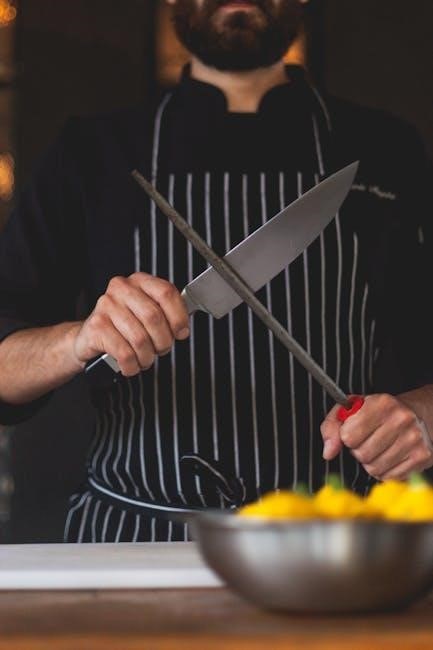
A honing steel doesn’t actually sharpen a knife; instead, it realigns the blade’s edge. Over time, the microscopic teeth on a knife’s edge bend and become misaligned, making it feel dull. Running the knife along a honing steel straightens these teeth, restoring the blade’s cutting ability.
Regular honing – before or after each use – is crucial for maintaining sharpness and extending the time between full sharpenings. Honing steels come in various materials, including steel, ceramic, and diamond, each offering a different level of abrasion and edge refinement. It’s a vital step in proper knife care.
Whetstones: The Traditional Approach
Whetstones represent a time-honored method for sharpening knives, favored by professionals and enthusiasts alike. These stones, available in various grits, utilize abrasive materials to remove metal and create a new, sharp edge. Mastering whetstone sharpening requires practice and patience, demanding consistent angle control and technique.
The process involves lubricating the stone with water or oil, then drawing the knife blade across its surface at a specific angle. Whetstones offer exceptional control over the sharpening process, allowing for precise edge creation and refinement, resulting in a truly razor-sharp blade.
Natural Whetstones vs. Synthetic Whetstones
Whetstones broadly fall into two categories: natural and synthetic. Natural whetstones, formed over centuries, possess unique abrasive qualities and are often prized for their subtle sharpening action. They tend to be softer and require more frequent flattening.
Synthetic whetstones, manufactured for consistency, offer a wider range of grits and are generally harder-wearing. They provide predictable results and are often more affordable. The choice depends on preference; natural stones offer tradition, while synthetic stones prioritize convenience and control.
Grit Levels and Their Applications
Whetstone grit levels dictate the sharpening stage. Coarse grits (around 200-400) rapidly remove metal, ideal for repairing damaged blades or establishing a new bevel. Medium grits (800-1000) refine the edge, removing scratches from coarser grits and forming the primary bevel.
Fine grits (3000-8000) polish the edge, creating a razor-sharp finish. Higher grits are for delicate work and maintaining sharpness. Progressing through grits is crucial for a refined, durable edge, ensuring optimal cutting performance.
Ceramic Rod Sharpeners: Precision and Fine Tuning
Ceramic rod sharpeners excel at honing and refining edges, rather than major reshaping. These sharpeners utilize hard ceramic rods to realign the blade’s microscopic teeth, restoring sharpness. They’re perfect for daily maintenance, keeping knives in peak condition between more intensive sharpening sessions.
Ideal for removing burrs and achieving a polished edge, ceramic rods demand a consistent angle and light pressure. They offer precision, making them suitable for quality knives needing subtle adjustments, not extensive repair.
Electric Knife Sharpeners
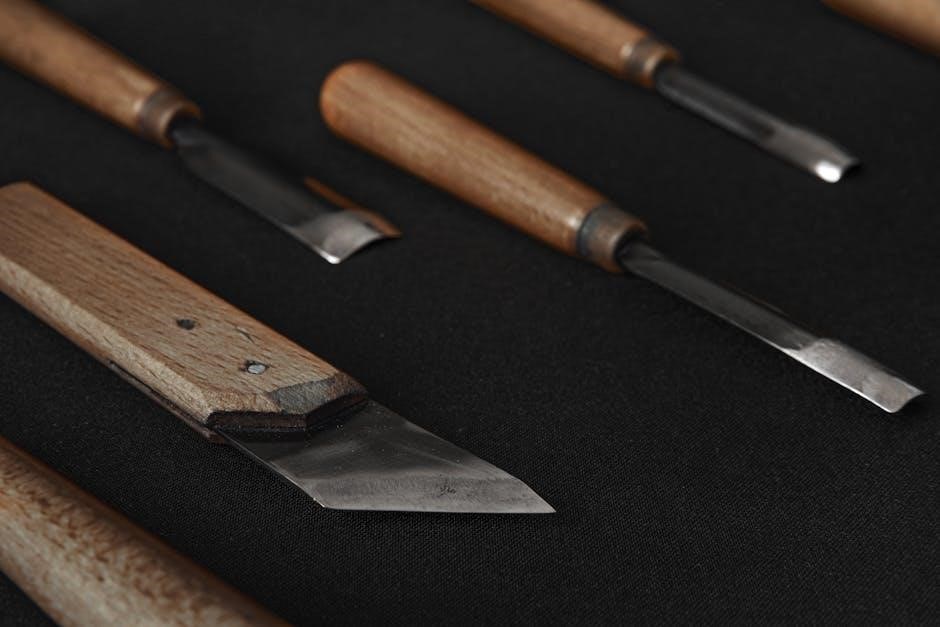
Electric sharpeners offer speed and consistency, utilizing motorized wheels to quickly restore a blade’s edge. They are a convenient option for frequent sharpening needs.
Benefits of Electric Sharpeners: Speed and Consistency
Electric knife sharpeners dramatically reduce sharpening time compared to manual methods. Their motorized systems quickly and efficiently restore a dull edge, making them ideal for busy cooks. Beyond speed, electric sharpeners excel at consistency.
They maintain a uniform angle throughout the sharpening process, a crucial element often challenging to achieve with manual techniques. Models like those from ChefsChoice and Work Sharp offer multiple stages – grinding, honing, and polishing – ensuring a refined, professional-quality edge. This consistent result minimizes the risk of uneven sharpening and maximizes blade performance.
Different Electric Sharpener Features
Electric knife sharpeners boast a range of features catering to diverse needs. Many offer multiple sharpening stages – coarse, medium, and fine – for repairing damage and refining the edge. Angle guides ensure consistent blade alignment, crucial for optimal sharpness.
Some models feature adjustable sharpening angles, accommodating different knife types. Others include specialized slots for serrated knives. Features like removable sharpening heads simplify cleaning and maintenance. Premium sharpeners, such as those by ChefsChoice, may incorporate diamond abrasives for enhanced cutting power and durability.
Choosing the Right Electric Sharpener for Your Needs
Selecting the ideal electric sharpener depends on your sharpening frequency and knife collection. For occasional touch-ups, a basic model with two or three stages suffices. Frequent cooks and those with numerous knives benefit from sharpeners with adjustable angles and specialized slots for serrated blades.
Consider the types of knives you own; some sharpeners excel with specific blade styles. Brands like Work Sharp offer versatile solutions, while Presto provides reliable, affordable options. Prioritize models with robust motors and durable abrasive materials for long-term performance.
Comparing Sharpening Methods
Manual versus electric sharpeners offer trade-offs: manual provides control, while electric delivers speed and consistency. Whetstones demand skill, pull-through sharpeners prioritize convenience.
Manual vs. Electric: Pros and Cons
Manual knife sharpeners, like whetstones and pull-through models, offer precision and control, appealing to those who enjoy a hands-on approach. They are generally more affordable and portable, requiring no electricity. However, achieving consistent sharpness demands practice and technique.
Electric sharpeners prioritize speed and consistency, making them ideal for frequent sharpening or users seeking convenience. They often feature multiple stages for grinding, honing, and polishing. The downside includes a higher price point and potentially removing more metal than necessary if not used carefully.
Ultimately, the “best” choice depends on individual needs and preferences.
Whetstones vs. Pull-Through Sharpeners
Whetstones represent a traditional sharpening method, offering ultimate control over the angle and pressure applied to the blade. They require skill and patience to master, but deliver exceptionally sharp results and allow for customized sharpening. Different grit levels cater to various sharpening needs, from repairing damage to refining the edge.
Pull-through sharpeners prioritize convenience and ease of use. These devices guide the blade at a pre-set angle, making them suitable for beginners. However, they often lack the precision of whetstones and may remove more metal, potentially shortening the knife’s lifespan.

Top Knife Sharpener Brands
Leading brands like ChefsChoice, Work Sharp, and Presto offer innovative and reliable sharpening solutions for both professional chefs and home cooks alike.
ChefsChoice: Innovation in Electric Sharpening
ChefsChoice consistently pushes boundaries in electric knife sharpening technology, offering models designed for diverse blade types and sharpening needs. They are renowned for their multi-stage sharpening systems, which combine grinding, honing, and polishing to create exceptionally sharp edges.
Their sharpeners often feature precision guides, ensuring consistent angles and optimal results, even for novice users. ChefsChoice prioritizes both speed and accuracy, delivering professional-quality sharpening in a convenient, at-home format.
Many models accommodate both American and European style knives, making them a versatile choice for any kitchen.
Work Sharp: Versatile Sharpening Solutions
Work Sharp distinguishes itself by offering a broad spectrum of sharpening solutions, extending beyond traditional kitchen knives to include outdoor tools and specialized blades. They are well-regarded for their guided sharpening systems, which simplify angle control and deliver consistent results.
Their product line includes belt-driven sharpeners, providing aggressive material removal for repairing damaged edges, and precision adjust systems for fine tuning.
Work Sharp’s versatility appeals to both professional chefs and DIY enthusiasts, offering solutions for a wide range of sharpening tasks and blade geometries.
Presto: Reliable and Affordable Options
Presto consistently delivers dependable and budget-friendly knife sharpening solutions, making them a popular choice for home cooks. The Presto 08810 Professional EverSharp Knife Sharpener stands out as a top pick, praised for its intuitive design and effective performance.
These sharpeners typically feature multiple grinding wheels, capable of sharpening, honing, and polishing blades with relative ease.
While perhaps lacking the advanced features of higher-end models, Presto sharpeners provide a practical and accessible entry point into knife maintenance, ensuring consistently sharp edges.
Sharpening Techniques
Mastering consistent angles and applying proper grip/pressure are crucial for achieving a truly sharp edge. These fundamentals unlock optimal performance from any sharpener.
Angle Consistency: The Key to a Sharp Edge
Maintaining a consistent angle throughout the sharpening process is paramount. A fluctuating angle results in an unevenly sharpened blade, diminishing its cutting performance. Different knives require different angles; typically, 20 degrees suits European knives, while 15 degrees is ideal for Asian blades.
Visual guides or angle guides on sharpeners assist in achieving this consistency. Practice makes perfect – start slowly and focus on maintaining the correct angle with each pass. Consistent angle work ensures a uniformly sharp and effective cutting edge, maximizing the knife’s lifespan and usability.
Proper Grip and Pressure
A firm, yet controlled grip is essential for safe and effective sharpening. Securely hold the knife handle, keeping your fingers away from the blade’s edge. Apply gentle, even pressure during each stroke; excessive force isn’t necessary and can damage the blade or the sharpener.
Let the sharpener do the work. Maintain a consistent downward pressure, guiding the knife smoothly along the sharpening surface. Avoid jerky motions. Proper grip and pressure contribute significantly to achieving a sharp, consistent edge without risking injury or tool damage.

Knife Sharpening Safety
Prioritize hand protection with cut-resistant gloves. Maintain focus, and always follow the sharpener’s instructions carefully to prevent accidents and ensure safe operation.
Protecting Your Hands
Sharp knives demand respect, and protecting your hands is paramount during sharpening. Investing in cut-resistant gloves is a crucial first step, providing a barrier against accidental slips. These gloves aren’t foolproof, so maintaining unwavering focus throughout the process remains essential.
Always use a stable surface and a firm grip, avoiding distractions. Be mindful of the blade’s trajectory and keep your hands clear of the sharpening path. Even with electric sharpeners, the blades are incredibly sharp, and caution is key to preventing serious injury. Prioritize safety above speed.
Maintaining Your Sharpener
Consistent performance from your knife sharpener relies on regular maintenance. For whetstones, cleaning after each use removes metal filings, preventing clogging and ensuring a smooth sharpening surface. Flattening whetstones periodically is also vital to maintain a consistent grit.
Electric sharpeners require less frequent, but equally important, care. Remove accumulated metal particles and inspect the grinding wheels for wear. Following the manufacturer’s instructions for cleaning and lubrication will extend the sharpener’s lifespan and preserve its effectiveness. A well-maintained sharpener is a safe sharpener.
Troubleshooting Common Sharpening Problems
Addressing dull spots or nicks requires patience and the correct technique. Uneven sharpening often stems from inconsistent angles or pressure during the process.
Dull Spots and Nicks
Encountering dull spots or nicks on your blade is common, but resolvable. Begin by assessing the damage; minor nicks can often be removed with a whetstone, utilizing a slightly coarser grit to reshape the edge. Apply gentle, consistent pressure, maintaining the correct angle.
For more significant damage, consider a dedicated nick repair tool or professional sharpening. Avoid aggressive sharpening, as this can further damage the blade. Patience is key – gradually work through the affected area, frequently testing sharpness to avoid over-correction. Remember consistent angles are crucial for a uniform edge.
Uneven Sharpening
Uneven sharpening often stems from inconsistent angles or pressure during the process. If one side of the blade is sharper than the other, revisit the sharpening process, focusing on maintaining a consistent angle throughout each stroke.
Pay close attention to applying equal pressure across the entire blade length. Regularly test the sharpness on both sides to monitor progress and identify areas needing further attention. A honing steel can help refine the edge and correct minor inconsistencies, ensuring a uniformly sharp blade for optimal performance and safety.

Cleaning and Maintenance of Knife Sharpeners
Regular cleaning extends sharpener lifespan and performance. Whetstones require flattening, while electric sharpeners benefit from debris removal for consistent results.
Whetstone Cleaning and Flattening
Maintaining whetstones is crucial for optimal sharpening. After use, thoroughly clean with water to remove metal filings, preventing them from becoming embedded and affecting future sharpening. Allow the stone to air dry completely. Over time, whetstones can become uneven; this is where flattening comes in.
Flattening restores a perfectly level surface, ensuring consistent contact with the blade. Use a flattening stone or lapping plate with abrasive grit. Regular flattening—every few uses, depending on stone hardness and usage—guarantees precise sharpening angles and prevents uneven wear on your knives. A flat stone equals a sharp knife!
Electric Sharpener Maintenance
Electric knife sharpeners, while convenient, require regular maintenance to ensure longevity and performance. After each use, unplug the sharpener and carefully remove any metal filings from the grinding wheels and collection trays. These filings can dull the wheels if left to accumulate.
Periodically inspect the wheels for wear and tear; replace them according to the manufacturer’s instructions. Some models have replaceable parts. Avoid using water or abrasive cleaners, as these can damage the motor or electrical components. A dry cloth is usually sufficient for cleaning the exterior.

Where to Buy Knife Sharpeners
Knife sharpeners are readily available both online and in physical stores. Explore options at major online retailers and local hardware stores for diverse choices.
Online Retailers
Numerous online retailers offer a vast selection of knife sharpeners, providing convenience and competitive pricing; Major platforms like Amazon feature extensive inventories, including models from ChefsChoice and Work Sharp. These sites often showcase customer reviews, aiding informed decision-making.
Specialty kitchenware websites also present curated collections, focusing on quality and specific sharpening needs. Direct-from-manufacturer websites, such as those for Presto, can offer exclusive deals and detailed product information. Comparing prices and shipping costs across different online stores is crucial for securing the best value.
Local Hardware Stores
Visiting local hardware stores provides a tactile shopping experience, allowing you to physically examine different knife sharpeners before purchasing. Knowledgeable staff can offer personalized recommendations based on your knife types and sharpening skills.
These stores often stock popular brands like Presto and may carry manual options such as honing steels and pull-through sharpeners. While selection might be smaller than online retailers, the immediate availability and potential for expert advice are valuable benefits. Supporting local businesses is another positive aspect of this shopping method;