Sun Joe Pressure Washer Soap Dispenser: A Comprehensive Guide
Welcome! This guide details everything you need to know about utilizing the soap dispenser feature on your Sun Joe pressure washer for optimal cleaning results.
Sun Joe pressure washers are renowned for their efficiency and user-friendly design, and the integrated soap dispenser is a key component of this. This feature allows you to effortlessly apply detergents, soaps, and cleaning solutions during your pressure washing tasks, significantly enhancing cleaning power.
Understanding how your Sun Joe soap dispenser functions is crucial for achieving the best results and preventing potential damage to your machine. Different models may have slight variations in their dispenser systems – some feature onboard tanks, while others utilize siphon tubes for external soap containers.
This guide will provide a detailed overview of all aspects of the Sun Joe soap dispenser, from identifying the soap inlet to troubleshooting common issues, ensuring a spotless clean every time.
Understanding Your Sun Joe Pressure Washer Model
Before diving into the specifics of the soap dispenser, it’s vital to identify your exact Sun Joe pressure washer model. Different models possess varying features and configurations regarding soap application. Locate the model number – usually found on a sticker on the machine’s housing.
Refer to your owner’s manual; it contains detailed diagrams and instructions specific to your unit. Pay close attention to the section illustrating the soap dispenser system. Some models have a dedicated dial for soap concentration, while others rely on a two-position switch.
Knowing your model’s specifics will ensure you follow the correct procedures and avoid any compatibility issues when using the soap dispenser.
Compatibility with Soap Dispensers
Sun Joe pressure washers are generally designed to work with a wide range of detergents, but compatibility isn’t universal. Avoid using abrasive cleaners, solvents, or flammable liquids, as these can damage the pump and void your warranty. Specifically, never use bleach or chlorine-based detergents.
Stick to detergents specifically formulated for pressure washers. These are designed to be low-sudsing and won’t harm the internal components. Check your owner’s manual for a list of recommended detergents.
Using incompatible soaps can lead to clogs, reduced performance, and potential damage to your Sun Joe unit, so choose wisely!
Identifying the Soap Inlet
Locating the soap inlet is crucial for proper detergent application. On most Sun Joe models, it’s a small, usually colored, port or nozzle located near the high-pressure nozzle connection. It’s often marked with a symbol resembling a soap bottle or a ‘S’.
Refer to your pressure washer’s manual – it will have a diagram clearly illustrating the soap inlet’s exact position for your specific model. Some models feature an integrated soap tank, while others utilize a siphon tube connection.
Ensure you’ve identified the correct inlet before proceeding, as attempting to inject soap elsewhere could damage the machine.
Types of Sun Joe Soap Dispensers
Sun Joe pressure washers employ two primary soap dispensing systems. The first is an on-board soap tank, a self-contained reservoir integrated directly into the machine. This offers convenience, eliminating the need for external containers.
The second system utilizes a siphon tube. This allows you to draw soap from a separate, standard-sized soap container. This is ideal for larger cleaning jobs or when using specialized detergents.
Some models may even offer compatibility with both systems, providing flexibility. Understanding which type your model uses is key to proper setup and operation.
On-Board Soap Tanks
Sun Joe pressure washers with on-board soap tanks provide a streamlined cleaning experience. These tanks are typically located on the upper portion of the unit, often behind a removable panel. They’re designed for easy filling and offer a convenient, all-in-one solution for soap application.
Capacity varies between models, so always check your owner’s manual. Overfilling can cause leaks and malfunction. The tank usually features a clearly marked fill line. Remember to use only pressure washer-approved detergents to prevent damage to the internal components.
Siphon Tubes & External Soap Containers
For Sun Joe models lacking an on-board tank, or for those preferring larger soap volumes, siphon tubes offer a versatile solution. These tubes connect to an external soap container – a bottle or bucket – and draw detergent into the pressure washer’s system.
Ensure the siphon tube reaches the bottom of your soap container to effectively draw the solution. Proper priming is crucial; we’ll cover that shortly. Using a larger container allows for extended cleaning sessions without frequent refills. Always verify compatibility with your specific Sun Joe model.
Preparing Your Soap Solution
Before connecting to your Sun Joe pressure washer, carefully prepare your cleaning solution. Always use detergents specifically designed for pressure washers; household cleaners can cause damage or void your warranty.
Warm water often enhances soap effectiveness, especially in cooler temperatures. Thoroughly mix the soap concentrate with water according to the manufacturer’s instructions – we’ll detail mixing ratios in the next section. Avoid creating excessive suds, as this can hinder performance. Pre-mixing ensures consistent cleaning power throughout your project.
Recommended Soaps for Sun Joe Washers
Sun Joe offers a range of specialized soaps for various cleaning tasks. Their all-purpose cleaner is excellent for general dirt and grime, while the deck and patio cleaner tackles tough stains on outdoor surfaces. For automotive needs, consider their car wash soap, formulated to be gentle on paint.
Third-party soaps are acceptable, but ensure they are specifically designed for pressure washers and are non-corrosive. Avoid bleach-based cleaners, as they can damage the pump. Always check the soap’s compatibility with your washer model before use to prevent potential issues.
Mixing Ratios: Avoiding Damage
Maintaining the correct soap-to-water ratio is crucial for both cleaning effectiveness and protecting your Sun Joe pressure washer. Over-concentration can lead to excessive foaming, potentially damaging the pump and voiding the warranty. Typically, a ratio of 1:3 or 1:4 (soap to water) is recommended, but always consult the soap manufacturer’s instructions.
Start with a diluted mixture and gradually increase concentration if needed. Never use undiluted soap directly in the dispenser. Regularly check your washer’s manual for specific guidelines related to your model, ensuring optimal performance and longevity.
Installing the Soap Dispenser (On-Board Tank)
For models equipped with an on-board soap tank, installation is generally straightforward. Begin by locating the tank – it’s usually a translucent container integrated into the pressure washer’s body. Carefully remove the tank cap, often featuring a twist-and-lock mechanism. Ensure the area around the tank opening is clean to prevent debris from entering the system.
Before filling, familiarize yourself with the tank’s maximum capacity, clearly marked on the container itself. Avoid overfilling, as this can cause leakage and potentially damage the unit. Securely replace the cap after filling, confirming a tight seal.
Locating the Tank & Removing the Cap
The on-board soap tank is typically found on the upper section of your Sun Joe pressure washer, often near the handle or control panel. It’s usually a clearly visible, translucent plastic container. To access it, locate the cap – it may be a simple screw-on type or a twist-and-lock design.
Gently but firmly, rotate the cap counterclockwise (for screw-on types) or align the unlock indicators (for twist-and-lock). Avoid excessive force, as this could damage the tank or cap. Once loosened, carefully remove the cap and set it aside in a clean, safe place to prevent loss.
Filling the Tank – Capacity Limits
When filling the on-board soap tank, it’s crucial to adhere to the specified capacity limits outlined in your Sun Joe pressure washer’s manual. Overfilling can cause leakage and potentially damage the unit’s internal components. Typically, these tanks hold between 16 to 32 ounces of soap solution.
Slowly pour your pre-mixed soap solution into the tank, leaving a small air gap at the top. This allows for expansion and prevents overflow during operation. Always use a funnel to avoid spills and ensure a clean filling process. Never use undiluted soap, as it can clog the dispenser.
Using a Siphon Tube & External Soap Container
For models without an on-board tank, or when you prefer using larger soap quantities, a siphon tube and external container are ideal. Ensure your container has a secure lid to prevent spills and contamination. The siphon tube’s end must be fully submerged in the soap solution for proper operation.
Select a container compatible with your chosen soap, avoiding materials that could react or degrade. Carefully insert the siphon tube into the soap, ensuring it doesn’t touch the bottom where sediment might accumulate. A clean intake prevents clogs and ensures consistent soap flow during pressure washing.
Connecting the Siphon Tube to the Inlet
Locate the soap inlet on your Sun Joe pressure washer – it’s typically a colored port, often black or blue, clearly marked for soap suction. Gently but firmly push the other end of the siphon tube onto this inlet, ensuring a snug and secure connection. A loose connection will prevent proper soap draw and reduce cleaning effectiveness.
Verify the connection by lightly tugging on the siphon tube; it should not easily detach. Avoid forcing the tube, as this could damage the inlet or the tube itself. A secure fit is crucial for consistent soap delivery during operation, maximizing your pressure washer’s cleaning power.
Priming the Siphon Tube
Priming the siphon tube is essential to initiate soap flow. After connecting the tube, turn on your Sun Joe pressure washer and select the soap dispensing setting on the control panel. Observe the siphon tube; you may need to gently agitate the soap container or manually draw soap through the tube initially.
Continue running the washer for approximately 20-30 seconds, allowing the pump to create suction and pull the soap solution up the tube. Watch for soap to appear at the nozzle – this indicates successful priming. If soap doesn’t flow, re-check connections and repeat the process.
Activating the Soap Dispenser Function
Once your siphon tube is primed, or your on-board tank is filled, activating the soap dispenser is straightforward. Locate the detergent selector dial or button on your Sun Joe pressure washer’s control panel. Rotate or press this control to the “Soap” or “Detergent” setting – the exact labeling varies by model.
Ensure the water flow is adjusted to a lower pressure setting for effective soap application. Begin washing, observing the consistent flow of soapy water from the nozzle. If the flow is inconsistent, revisit the priming steps or check for obstructions.
Pressure Washer Control Panel Settings
Your Sun Joe pressure washer’s control panel is central to soap dispensing. Beyond the detergent selector, understand the pressure adjustment dial or lever. For soap application, a lower pressure setting is generally recommended to allow the detergent to dwell and effectively lift dirt.
Some models feature a variable nozzle, allowing you to adjust the spray pattern – a wider fan pattern is ideal for soap coverage. Familiarize yourself with any additional controls, such as a turbo nozzle switch, and ensure it’s disengaged when using soap to prevent dilution.

Adjusting Soap Concentration
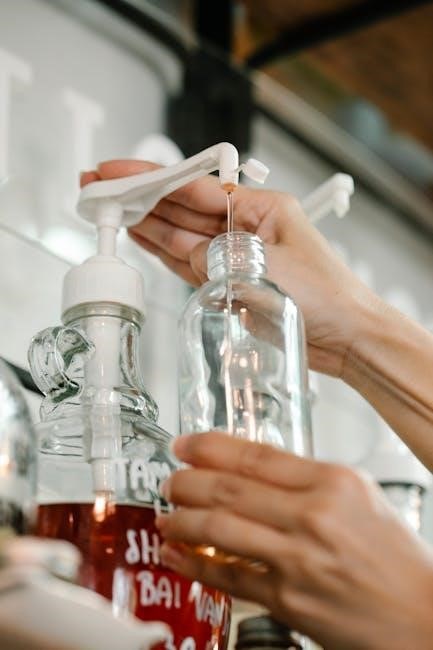
Achieving the right soap concentration is crucial for effective cleaning without residue. Most Sun Joe washers don’t offer direct concentration control; instead, it’s managed by the soap dispenser’s intake and the mixing ratio of your solution. Start with the soap manufacturer’s recommended dilution ratio – typically, a few ounces per gallon of water.
Observe the cleaning results and adjust accordingly. If dirt remains, slightly increase the soap proportion (within safe limits – see mixing ratios section). Conversely, if streaking occurs, dilute the solution further. Remember, more soap isn’t always better; it can lead to build-up.
Troubleshooting Common Soap Dispenser Issues
Encountering problems with your Sun Joe’s soap dispenser? Here’s how to address frequent issues. First, if no soap flows, inspect the soap inlet filter for clogs – remove and rinse thoroughly. Next, weak soap flow often indicates an air lock in the siphon tube; prime it again following the instructions.
Leaks around the dispenser suggest loose connections; ensure the siphon tube is securely attached to both the container and the washer’s inlet. Finally, if soap bubbles excessively, you may be using too much soap or the wrong type – adjust the mixture or switch to a suitable detergent.
No Soap Flowing – Clogged Filter
A common reason for no soap dispensing is a clogged filter within the soap inlet. This filter prevents debris from entering the pressure washer’s pump. To resolve this, locate the soap inlet – usually a small, threaded port on the pump housing. Carefully unscrew and remove the filter.
Inspect it closely for soap scum, dirt, or mineral deposits. Rinse the filter thoroughly under running water, using a small brush if necessary to dislodge stubborn buildup. Ensure the filter is completely clean and dry before reinstalling it securely. Re-test the soap dispenser function.
Weak Soap Flow – Air Lock in Siphon Tube
If you’re experiencing a weak or inconsistent soap flow when using an external soap container and siphon tube, an air lock is likely the culprit. This happens when air gets trapped within the siphon tube, interrupting the soap’s flow. To remedy this, disconnect the siphon tube from the pressure washer’s inlet.
Gently shake the siphon tube to dislodge any trapped air bubbles. Submerge the intake end of the tube completely into the soap solution and manually prime it by creating suction – you can use a syringe or gently squeeze the tube. Reconnect the tube and re-test the soap dispensing function.
Soap Dispenser Leaking – Check Connections
Discovering a leak around your Sun Joe pressure washer’s soap dispenser can be frustrating, but often has a simple fix. Begin by thoroughly inspecting all connections – where the siphon tube attaches to both the soap container and the pressure washer inlet, and around the on-board tank cap if applicable.
Ensure everything is securely tightened, but avoid over-tightening, which could damage the plastic components. Check for any cracks or damage to the siphon tube itself. If using an on-board tank, verify the tank’s seal is intact. Replace any damaged parts immediately to prevent further leakage.
Cleaning and Maintaining Your Soap Dispenser
Regular cleaning is crucial for maintaining optimal performance of your Sun Joe pressure washer’s soap dispenser. After each use, always flush the system with clean water to remove any remaining soap residue, preventing clogs and ensuring consistent operation. For on-board tanks, periodically remove and wash the tank with mild soap and water.
Inspect the siphon tube for buildup and clean it thoroughly. During long-term storage, ensure the dispenser is completely empty and dry to avoid mold or mildew growth. Proper maintenance extends the life of your dispenser and guarantees effective cleaning every time.
Flushing the System After Each Use
To effectively flush your Sun Joe pressure washer’s soap dispenser system, begin by emptying any remaining soap from the tank or external container. Next, fill the soap reservoir with clean, fresh water. Activate the soap dispenser function on your pressure washer and run the machine for approximately 30-60 seconds.
This process forces the clean water through the lines, dissolving and removing any lingering soap residue. Repeat this flushing procedure a couple of times to ensure a thorough cleanse. Proper flushing prevents clogs and maintains optimal performance for future cleaning tasks.
Long-Term Storage – Preventing Clogs
When storing your Sun Joe pressure washer for extended periods, complete a thorough flush of the soap dispenser system as previously described. After flushing, consider adding a specialized pressure washer antifreeze solution to the soap tank. This prevents soap residue from drying and solidifying within the lines, which can cause frustrating clogs.
Ensure the antifreeze circulates through the entire system by briefly activating the soap dispenser. Finally, store the pressure washer in a clean, dry environment, protecting it from freezing temperatures. Following these steps guarantees a hassle-free start-up next season!